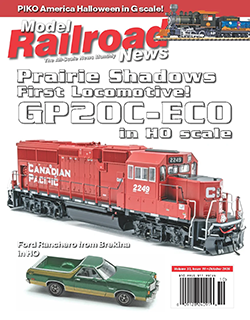

Review by Joe Bohannon/model photos by Pamela Varney
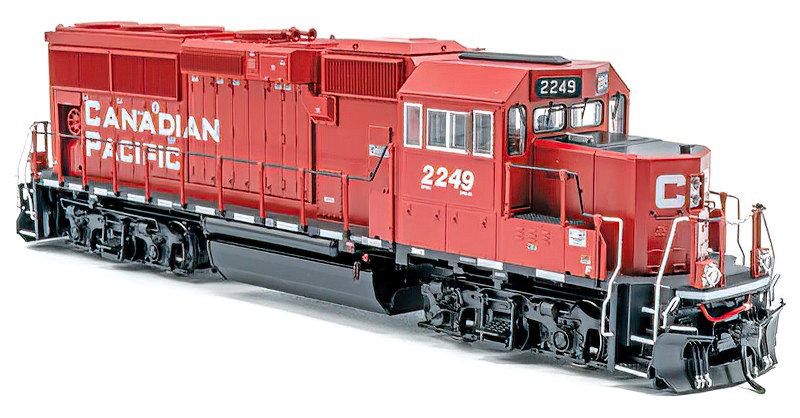
Prairie Shadows is a fairly new hobby company and, up to this point, is known for its fine HO and N scale rolling stock offerings. This ready-to-run GP20C-ECO diesel locomotive represents Prairie Shadows’ debut in the all-new motive power miniature market with this finely rendered, solid-performing 1:87 reproduction. The first offerings include red Canadian Pacific (CP), the prototype for this unique four-axle unit, and a limited supply of undecorated GP20C-ECO models. Following typical industry practice, Prairie Shadows offers DCC-sound GP20C-ECOs with ESU supplying its popular electronics, and you’ll find non-sound, standard DC editions in the run.
Repowering
The railroad industry is full of examples of opportunities where repowering breathes new life into the most visible part of railroading — the locomotive. What is “repowering?” It is the replacement of the prime mover or diesel engine found in a locomotive. Electro-Motive Division (EMD) was a popular source in the early days of diesels for repowering locomotives from other builders when those competitor’s engines proved less than reliable. In 1951, EMD repowered a Baldwin VO-1000 with a 12-cylinder 567B prime mover for Louisville & Nashville. Some railroads (Frisco, Rock Island, Missouri-Kansas-Texas, and Missouri Pacific are examples) rostered many examples of these odd “Frankenstein’s monster” locomotives. I believe an example of these mash-ups could be found on most every railroad at any one point in time; many times the body was altered with a replacement EMD-style hood when the new prime mover was installed.
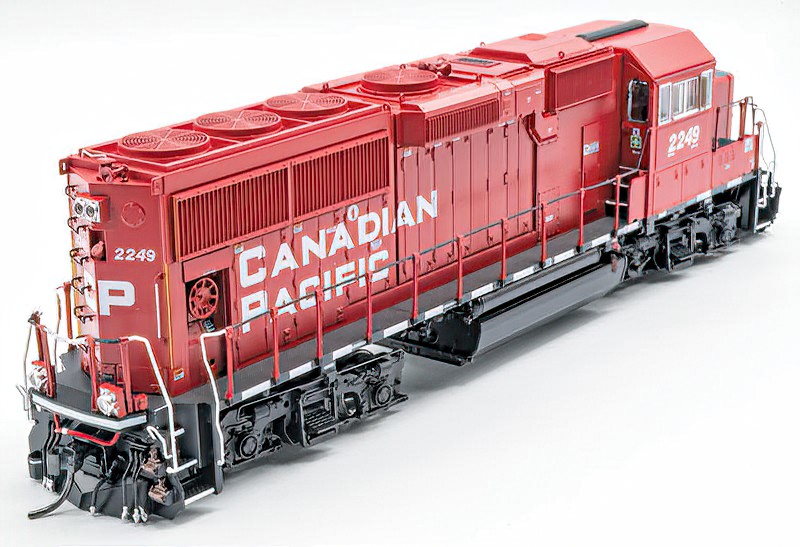
ABOVE: The rear includes a single bugle air horn, ditchlights, m.u. receptacle, spare knuckle details, and more. This model accurately replicates the prototype’s inset brakewheel on the rear of the long hood on the engineer’s side of the unit.
While repowering may be a common practice, their unique builds per railroad make them an unusual find as a regular-production model release. Occasionally they are offered, such as Rapido Trains’ recently produced set of Alco PA locomotives that were repowered with EMD 16-567C engines (see December 2025’s Model Railroad News cover story on these Santa Fe offerings in HO). Locomotive builders historically allowed railroads to trade in locomotives, and manufacturers utilized select parts like trucks on new locomotives going back to the road (with a discount applied for the trade-in components).
In 1976, a novel concept was introduced in EMD’s catalog with its GP15-1. The GP15-1 was specifically marketed as a factory rebuilt locomotive. The goal was to make EMD competitive with railroads’ in-house rebuilding shops. Many railroads were facing aging first-generation locomotives with reliability becoming a challenge and a need to modernize components to better, more robust standards. The rebuilding boom came about partly due to uncertainty in the North American railroad scene, and a cost-effective solution was invaluable. By 1980, the U.S. had gone through two serious gas shortages and the railroad industry pivoted into fuel conservation.
EMD’s GP15s reflected this change as the GP15T replaced the non-turbo 12-cylinder 645 powered GP15-1/GP15AC with a slightly more fuel-efficient turbo charged 8-cylinder 645. 1982 marked the end of the GP15 series with a combined production of 372 units.
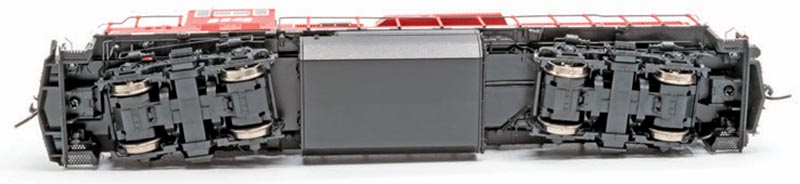
ABOVE: Excellent underbody detail includes piping and conduit features along the body above the well-rendered Dofasco truck sideframes.
While EMD never conquered the rebuild market, it kept the concept on its radar. Ten years after the GP15, EMD tried to market the next generation of factory rebuilt locomotives. A trio of demonstrator BL20-2 locomotives vied for orders starting in 1992. Externally sharing many components from the GP60-series, but under the skin they were extensively rebuilt GP9s — the modern looking locomotives didn’t garner orders like the GP15. In fact, only the three demonstrators were produced. One could say these BL20-2s were successful, only in the fact they operate today in an untouched state on the San Joaquin Railroad in California. The BL20-2 was most likely a victim of the changing dynamics in railroading, such as competitive contract locomotive rebuilding, the shift to six-axle locomotives in road service, and the reduction in local traffic business for Class 1s.
Third time may be the charm; at least EMD was hoping that idiom was true. In 2008, 16 years after the non-start of BL20-2 production, the market changed enough to warrant a new venture into a factory rebuilt locomotive. The U.S. Environmental Protection Agency (EPA) developed strict emission requirements and equally rigid timeline to meet those requirements. By 2008, new off-road diesels — including locomotives had to meet Tier 2 standards. This turned the industry on end and railroads searched for effective ways to meet these standards. EMD built two demonstrators to showcase its new 8-cylinder 710 prime mover. EMDX 7101 was built from a GP40, while its sister ended up being an extensively modified GP9. These “ECO” locomotives were advertised offering a 10- to 25-percent reduction in fuel consumption and met EPA Tier 2 requirements. The recycled core locomotives provided a savings to railroads, compared to newly built…
Prairie Shadows HO-scale GP20C-ECO diesel locomotive with DCC-sound
Canadian Pacific 2249
PS870501-08S, $324.99
Prairie Shadows Model Railway Co.