

 Review by Joe Martens/photos by Tony Cook
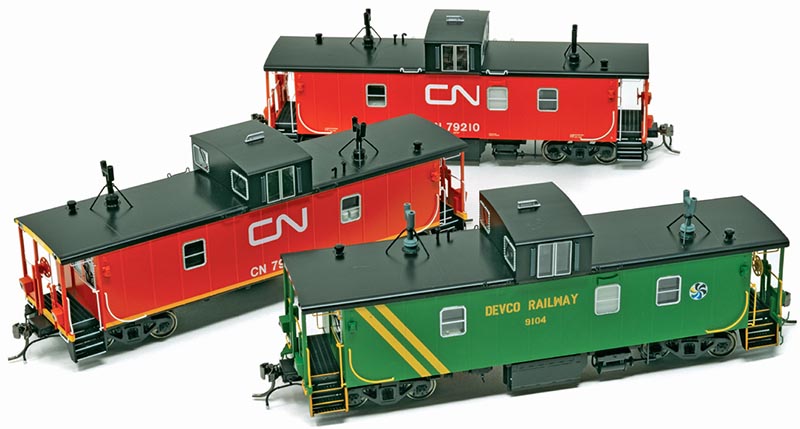
Caboose? No, these are Vans! Enter the Rapido Trains Hawker-Siddeley caboose, or “van,” as they were lovingly known in Canada. This model is another smashing success for the Canadian manufacturer for good reason, as these HO-scale models are jam-packed with details and lighting features.
Prototype History
In the early 1960s, Canadian National Railway (CN) needed a replacement for their aging fleet of wood-end cabooses. They turned to Hawker-Siddeley for this task, and, in 1967, the first examples from an order of 150 steel cabooses delivered to the delight of crews. The steel shells were constructed in Trenton, Nova Scotia, and final assembly occurred in Fort William, Ont. With comfort features including dual oil stoves, a refrigerator, electric power and lighting by way of an axle-driven generator, and fully cushion underframes by Waught, modern features that debuted on these cabooses quickly made their way into CN’s fleet during modernization in the 1970s. An advertisement (shown on the facing page) published by Hawker-Siddeley in October 1968’s Canadian Transportation touts “These cabooses of the future mean the beginning of the end for the little red caboose.” This ad is included in Rapido’s paperwork for this model; a nice touch.
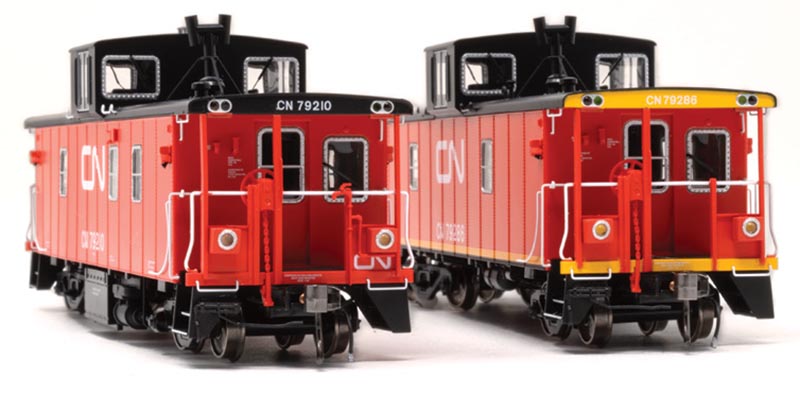
ABOVE: Here’s an end view of two of Rapido Trains’ CN-painted models. Since initial delivery of the prototype, the Late version (left) has had track inspection lights added and the steps painted black. The International version (right) received the same upgrades, plus the FRA yellow sill added for service in the U.S.
The most noticeable difference for these cabooses throughout their service life were the paint schemes. As-delivered, the cabooses had body colored red step wells and end cages. Later in life, the step wells and end cages were painted black. Some cabooses received yellow striping on the side sill for international service into the U.S., and were also modified with FRA-compliant window glass. Some cabooses escaped CN ownership by way of the Cape Breton Development Corporation (Devco) and received new numbers and a neat green with yellow stripes scheme. These were used on coal train service in Nova Scotia until some returned to CN through their acquisition of the Ottawa Central, who had acquired some of the Devco cabooses to run through the 2000s.
These cabooses lasted many years on Canadian National’s roster, through the end of the caboose era in the mid-1990s. Luckily, many have been preserved in museums, as most were still in good condition upon their retirement.
Model Details
The model has a plethora of separately applied metal components. The end platforms and steps of the model are etched-metal and possess excellent see-through characteristics. Numerous metal grab irons can be found across the model painted in accurate hues to match the prototype. The brake wheels and chains on the end cages on both ends are plastic, and thin enough to match the rest of the metal parts for a uniform appearance. The roof features two chimneys with tie-downs on both sides, with extra vents poking through from the bathroom.
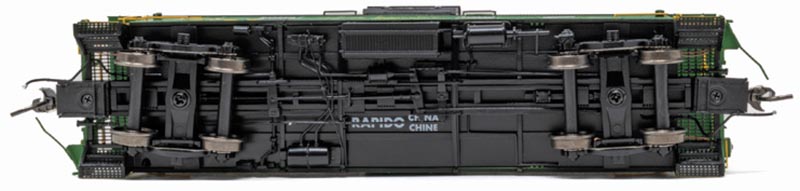
ABOVE: The caboose underbody has many details (separately applied and modeled on the base), including complete air piping and cushioning appliances reproduced down the middle. As per prototype, one truck includes an axle-mounted generator for electrical power to the cabin. The end platforms and steps are see-through, and you’ll notice the trainline air hose present, along with coupler cut levers on the ends of this van.
The interior of the model has many features, including the stoves with vents, multiple seats with armrests, ladder to the cupola, and handles on cabinets. Most interior details are plastic, but multiple colors are used for extra detail. With the lights on, the interior details are an area where the value of this caboose shows itself well. The interior is fully painted in multiple colors for even greater realism.
Although there are no rotating bearing caps on this model, all axles do pick up track power for the interior lights. Metal wheels also make for a smooth ride. The underbody contains numerous separately applied brake components, a mix of plastic and metal. Brake piping extends from the brake cylinder and air reservoir near the center of the underbody all the way to both ends of the model under the trucks. The underframe also has white lettering with the car weight. The axle-mounted generator is included as well, with a two-piece design that allows the truck to swivel…
