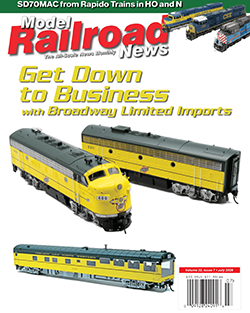

 Review by Dave Abeles/Model Photos by Tony Cook
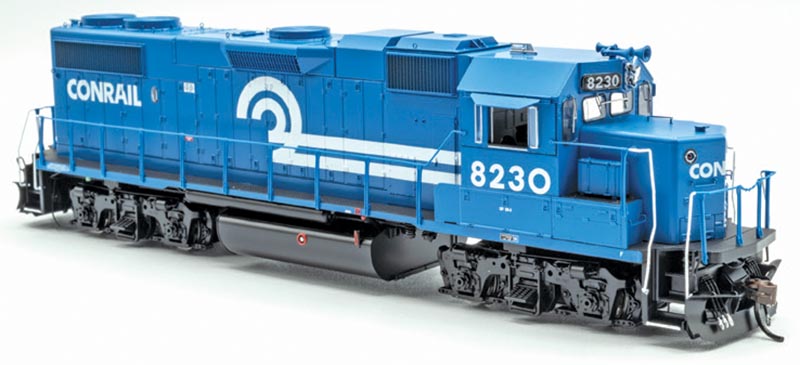
A recent production of Athearn Genesis GP38-2 diesel locomotive models is on shelves at hobby shops. There are exciting new features in addition to the solid mechanism and SoundTraxx (soundtraxx.com) DCC sound decoders we have become ac-customed to in the Genesis series. This release provides a familiar locomotive and a welcome addition to my Conrail (CR) lineup.
Long-time modelers in HO scale will recognize this brand name, as Athearn has been around for decades (the company is celebrating 80 years in 2026). The firm’s models are available at all hobby shops in those iconic blue cardboard boxes. Each of the ‘blue box’ kits, as they were known, included the basics that made the model reliable, powerful, and fun with all-wheel drive, all-wheel electrical pickup, and a simple mechanism that was easy to maintain or improve. With changes in the manufacturing allowing better mold relief and more details, Athearn would go on to upgrade again and again through the 1980s and into the 1990s. Hoods that had been extra wide to accommodate older motors moved to scale-width proportions during this time, creating beautiful starting points for a variety of General Motors’ Electro-Motive Division (EMD) Dash-2 series locomotive prototypes in 1:87.
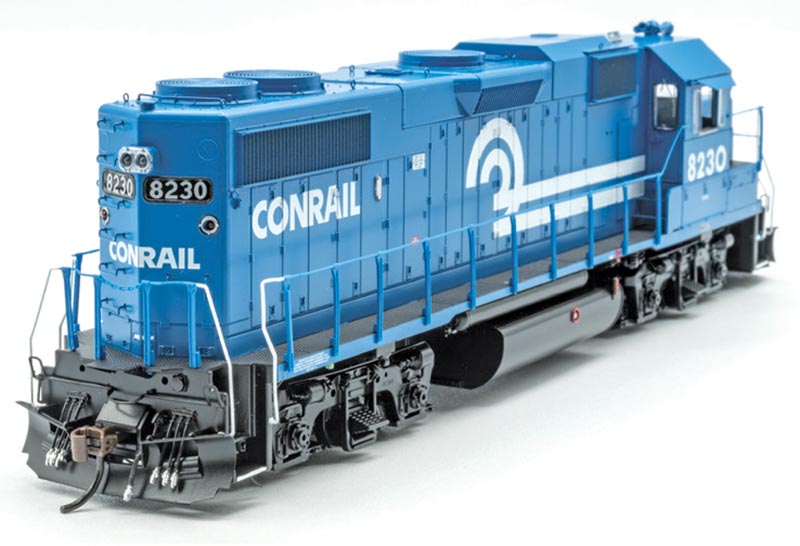
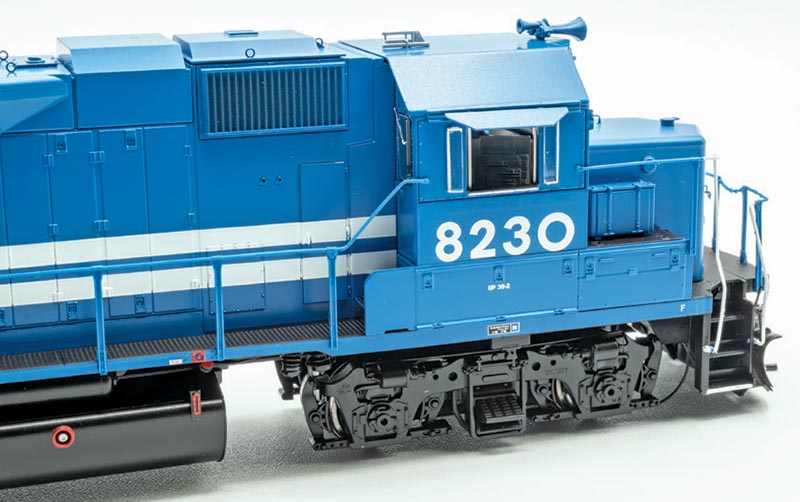
The Genesis line was a new approach to plastic models beginning in 1996. At the pinnacle of modeling, Athearn Genesis was, and is, aimed at the scale modeler and operator, with amaz-ing separately-applied detail parts, improved motor, and upgraded drive design based on the trusty concepts of those first gear-driven drivetrains that made the company famous. This was an exciting development at the time – an old favorite brand, reimagined for the future. Release after release has included railroad and locomotive number-specific detailing, wire grab irons, amazing molding, and crisp paint work. EMD’s GP38-2 joined the Genesis line in 2016 with the most up-to-date tooling at the time, allowing a variety of hood and carbody details to be included for different prototypes. The current release has upgraded the original model to include Soundtraxx Tsunami2 sound decoder and LED headlights, along with working LED marker lights.
The GP38-2 is truly a model that embraces that “GP” acronym (general purpose), as designated by EMD. A “Geep,” as they are known by railfans, is a road switcher built on trucks with two-axles each (as contrasted with ‘special duty’ locomotives that ride on three-axle trucks). As the locomo-tive market grew through the 1950s into the 1960s, EMD responded by offering a new, more powerful prime mover design based on 645-cubic-inch cylinders that used standardized parts across different locomotives. In 1966, the new EMD catalog included a variety of different horsepower locomotives based on the 645 prime mover in the 38-, 39-, 40-, and 45-series for both GP and SD series models. More horsepower needed? Just add more pairs of cylinders!
By 1970, with inroads from competitor General Electric, EMD revisited its designs. Customer feedback and maintenance records showed areas for improvements. The use of modular electronics in the locomotive was an idea that caught quick support from customers, as it allowed for removal of a troublesome electrical component that could be swapped with a spare. This put the locomotive right back into service and saved on downtime. The design was robust and low-maintenance. The entire line was made available in 1972 with the same base idea. Commemorating the second look that EMD gave these models, the famous ‘Dash-2’ series included offerings again for both GP and SD series models.
Building on earlier success with the GP30 and GP35, EMD offered many of those locomotives to be equipped standard with a turbocharger, a forced induction device that is powered by the flow of exhaust gases from the prime mover. The turbo uses this energy to compress the intake air, forcing more air into the engine in order to produce more power for a given displacement.
The GP38 and GP38-2 listing was the lone exception in the new line. Since 2,000 horsepower was reached easily with a 12-cylinder prime mover, EMD decided to keep a roots-blown prime mover option for the 38-series, including the Dash-2 offering starting in 1972. The lack of a turbocharger reduced a future maintenance item, which was important for railroads that didn’t see the need for the extra horsepower in the first place. In appearance, the GP38-2 and all other EMD second-generation power were standardized on the now-legendary EMD spartan cab, as was first introduced on the GP35. That cab design would dominate EMD American locomotive production for the next 30 years.
EMD’s famous reliability and dependability drove huge numbers for the GP38-2 model. Between January 1972 and July 1986, a total of 2,264 GP38-2 locomotives were built including variants for export and Canadian railroads. Of this fleet, Penn Central railroad purchased a large group, with 223 models on its roster. Conrail, taking over Penn Central operations in 1976, followed suit and ordered 119 more GP38-2 models, nearly doubling the number of those units inherited from Penn Central…